Interview with Mike and Sharlisa.
Exciting couple of weeks at the Latah Recovery Community Center!
We have begun construction on the Crisis Services addition to our Center. This service will allow us to be part of the Rural Crisis Center Network. The RCCN is a network of local professionals working together to provide these services in several area communities. These professionals will help us by screening to make sure they are appropriate for our center, provide counseling and other local resources-all in a restful and soothing environment for up to 23 hours. This should have many positive impacts in our community. We plan to begin providing this service in August. Contact Darrell at latahrecoverycenter@gmail.com if you have questions!
Details are also becoming clearer on the funding we will receive for rural and veteran outreach. For now I can tell you that we are hoping to extend our volunteer based services iinto Potlatch, Troy/Deary and, hopefully Kendrick. Contact Amber at Vista.latahrecoverycenter@gmail.com if you have questions!
Here’s the latest writing prompt from our Write for You group: https://latahrecoverycenter.org/2019/06/25/a-two-fer-from-write-for-you/
We have new episodes of Recovery Radio available for download. Find them on our website, iTunes or Googleplay. The latest episode has Denise and Jonny talking about what an AA meeting is like.
Jannus, Inc. is bringing a great looking Peer Connections Conference coming to Moscow in September. CEUs available. Details here: https://secure.acceptiva.com/?cst=ALXKTW&fbclid=IwAR1WBg0Cx_ZvOEjclP0dSmepI60VAGqGHUy3Xvn9tsnO47tytT-BSfgC0kM
Here’s our June Calendar: https://latahrecoverycenter.org/wp-content/uploads/2019/06/june-2019-at-the-latah-recovery-center.pdf
Your friendly webmaster (Darrell) was bad last week, and didn’t send out the weekly writing prompt. So… It’s two-fer Tuesday! Scroll down for TWO prompts this week.
Older and Younger by 10
by Nancy Casey
Ten years. Is that a long time?
Sometimes, when you look back, 10 years can seem like 10 minutes. Sometimes, as you live through them, 10 minutes can seem like 10 years.
Today in your writing you will have a chance to think about the actual span of 10 years. What or who is 10 years older than you? Who or what is 10 years younger?
As you start to think about that, set up your page:
Draw a line at the top where you will write the title when you have finished.
Next, draw a circle, or a square or any kind of shape in the center of the page. That will be the space you can use for illustration and doodling.
Finally, draw two lines out from the center shape to the edge of the page in such a way that the remaining space on the page is divided roughly in half.
On one side of the page write the word “Older.” On the other side of the page, write “Younger.”
On the Older side of the page, write about things or people that are 10 years older than you. Think about people who are definitely older than you, but aren’t old enough to be your parent. Who was in high school when you were in preschool? Can you think of any inventions or types of knowledge that came into the world 10 years before you were born? What happened in history 10 years before you were born? Whatever those events left behind has been here 10 years longer than you.
On the Younger side of the page, write about people or things that are 10 years younger than you. Who was a baby when you were 10 years old? Do you remember what brand new technology or entertainment you longed for when you were 10? Do you have any books or toys or other objects that came into your life when you were 10? When you look at the people around you, is there anything particular you notice about the ones who are 10 years younger than you?
Use the illustration space to draw or doodle while you wait for ideas to pop into your mind.
When you have finished writing, read over your work. Add any decoration or color that you think the page needs. Sometimes a little doodling will help you think up a good title. Write the title at the top of the page and make sure the date is on it somewhere, too. Here is an example of what a person could write.
You can share what you have written by posting it as a comment below. To do that, you can type in your work. Or post a picture of it.
Ahead and Behind
Does your mind ever whirl round and round like a hamster in a cage, running through all the things that you must do? The things you ought to do? The things you wish you would do? The things that aren’t done yet?
Is your mind equally likely to spin, buzz, and review your many accomplishments?
Today in your writing, you will give your mind a chance to do both. First, set up your page.
Draw a line at the top where the title will go when you have finished. Beneath that line, add two subtitles. On the left write “Do.” On the right write “Done.”
Then make a pencil-thin column down the middle of the page. Inside that column write the letters of the alphabet.
What have you done so far in your life? Think about the chores you did this morning and your antics as a toddler. Think about the people you have helped, the meals you have cooked, the important things you have remembered. What have you organized? What messes have you cleaned up? Try and find something for every letter of the alphabet and write them down on the right-hand side of the page.
On the left-hand side of the page, write down things that you haven’t done yet. Think about the things you must do and the ones you ought to do. What do you wish you would do? Are there things you would like to learn? Places you would like to go? How would you like to change your life? What would you like to add to someone else’s experience?
There is an infinite universe of things you haven’t done out there. You don’t have to limit yourself to the ones that are “realistic.” Try to find something for every letter of the alphabet.
When you have filled up the page, write a title on the line you drew across the top. Write the date on it as well. Draw or doodle on the page if you want to do that. Sometimes a little doodling can help you get unstuck if you don’t know what to write. Doodling on the page after you have finished writing often helps you think up a good title.
Here is an example of what a person could write.
Do you find it easier to remember the past or imagine the future? Do you think of yourself as a person who “gets things done,” or someone burdened with more wishes and demands than one life has time for? You might want to get out a new page and write about that, too.
Nancy Casey has lived in Latah County for many years. You can find more of her work here. She leads a writing workshop at the Recovery Center on Thursday evenings at 5pm. Anyone can drop in—just show up. You can attend just for fun or work to earn a writing certificate. To sign up or get more information, contact Nancy or the Latah Recovery Community Center.

Denise and Jonny discuss what an AA meeting is like.
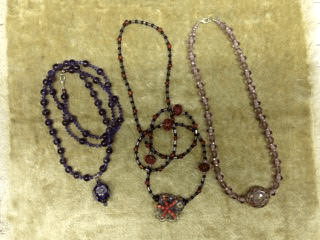
We have a fun workshop tonight being offered by local artist Jeanne Leffingwell. Stop by the Center tonight at 6pm for a Bead Workshop!

Another cool offering this week: Write for You Writing Support Group is Thursday, 5pm. Click here for this weeks writing prompt:
Don’t miss Recovery Radio 1pm on Thursdays on KRFP! Or download the podcast.
For our full calendar of activities in June click here:
by Nancy Casey
It’s early summer. The grass is growing so fast it is laughing. It’s a perfect time to celebrate that peculiar kind of change that infuses everything in the world—growth.
What does it mean for someone or something to grow? In some cases you can see it—a person, animal or thing can get larger before your very eyes. Children get taller. Our hair and nails make themselves a bit longer each day. In the evening, shadows grow.
Growth is not just a matter of size. Sometimes growing involves becoming more complex. Think of what happens to a seed underground. Or the way new leaves, whole branches, flowers and fruit add themselves to trees and bushes. Slime at the edge of a pond grows into a pollywog and then into a frog.
You can’t always see or measure growth. A person’s intelligence can grow, so can their store of knowledge or their ability to interpret and act on their emotions. Strength and competence grow somehow inside people. Grief and love grow. As does illness. Plant roots grow underground. Mold grows best in the dark. So do night-blooming flowers.
The fact that things grow is part of the larger understanding that nothing ever stays the same forever. But nothing keeps growing forever. Everything that grows eventually stops growing.
Today, as you set up your page, marking off space for a title and an illustration, think about all the different things that can grow and all the different ways they do that. Ask yourself what makes something stop growing.
Draw or doodle in the illustration space if that helps you quiet your mind and think.
Write about one thing that grows. Explain how it grows and why. Tell what makes it stop growing and what happens then. Use the word “grow.” Use the word “until.” Add any other information that comes to mind. An example, perhaps. Or a story.
If you have room on the page, write about something else that grows. Again, use the words “grow” and “until.” Explain how. Explain why. Explain whatever you want.
If you still have room on the page, choose something else and write about how it grows. Keep writing until the page is full.
When you have filled up a page, read over your work. Add whatever decoration and color the page needs. Sometimes a little doodling will help you think up a good title. Write the title at the top of the page and make sure the date is on it somewhere, too. Here is an example of what a person could write.
You can share what you have written by posting it as a comment below. To do that, you can type in your work. Or post a picture of it.
Nancy Casey has lived in Latah County for many years. You can find more of her work here. She offers (free!) writing help to anyone in recovery. This can be for any kind of writing project—resumes, letters, stories, novels, homework, etc. She leads a writing workshop at the Recovery Center on Thursday evenings at 5pm. Anyone can drop in—just show up. You can attend just for fun or work to earn a writing certificate. To sign up or get more information, contact Nancy or the Latah Recovery Community Center.
Reply
Forward
Here’s the latest from Write for You: https://latahrecoverycenter.org/2019/06/03/write-for-you-what-sunshine-does/
Here’s our June calendar:
June 2019 at the Latah Recovery Center
Of special interest is:
Bead Workshop w/Artist Jeanne Leffingwell Monday June 10 and 24, 6pm
PEER Social Activity: Free Fishing at Spring Valley (meet Rosauers, 10am) Friday June 8
by Nancy Casey
We are entering a new season. The sun is in the sky for more than fifteen and a half hours every day. There are fewer clouds and rainstorms to block its rays. This is a good time to pause and write a page about how sunshine affects the world we know.
Set up your page first. Draw a line at the top where you’ll put the title when you have finished. Set aside some space for drawing or doodling. (When you go back and look at your pages, you’ll be surprised by how much you like the ones that have some kind of illustration on them.)
The sun changes everything that it shines upon, so you won’t have trouble finding things to write about. Begin by writing the phrase,
When the sun shines on…
Continue by writing the name of something that the sun might shine upon.
If it is daytime and you are outdoors or near a window, you can see dozens of things responding to sunshine.
You also have many memories of sunshine, on your body and in the world around you. Some of those memories are in the form of knowledge—things that you have learned about the effects of sunshine without experiencing them yourself.
You can even think about sunshine in a symbolic way. Sometimes people talk about letting sunshine into attitudes, ideas, or the past. What happens when you “shed a little light” on something? In government, for example, “sunshine laws” are the laws that make sure government business isn’t conducted in secret.
Whatever you decide to start with, tell what happens when sunshine falls upon it. Write as little or as much as comes to your mind. Maybe you will fill up the whole page with ideas about just one thing. Maybe you will fill up a few lines and feel like you’ve said enough.
If you have room after your first idea, begin again,
When the sun shines on…
Name something else that the sun might shine upon and explain what happens when it does.
Continue this way until you have filled the page.
When you have finished writing, read over your work. Add decoration and color to the page however you would like. Sometimes a little doodling helps you think up a good title. Write the title at the top of the page and make sure the date is somewhere on the page, too. Here is an example of what a person could write.
You can share what you have written by posting it as a comment below. To do that, you can type in your work. Or post a picture of it.
Nancy Casey has lived in Latah County for many years. You can find more of her work here. She teaches a writing class that is free and open to anyone. It meets Thursdays from 5:00-6:15 pm at the Recovery Center, 531 S. Main St in Moscow, ID. Drop-ins welcome! For more information, contact Nancy or the Latah Recovery Community Center.
Did you know it’s national Mental Health Month? Participate in our community Mental Health Awareness Walk on the 29th. It starts at the LRCC, goes to the 1912 Center and back to Friendship Square. Free food, inspirational speakers and a nice walk. The only thing we don’t guarantee is the weather! See you there.
The latest writing prompt from Write for You. See our calendar for writing group meeting times. https://latahrecoverycenter.org/2019/05/28/write-for-you-what-it-isnt/
We have new podcasts of Recovery Radio available on I-Tunes and GooglePlay.
Here’s our calendar: https://latahrecoverycenter.org/wp-content/uploads/2019/04/may-2019-at-the-latah-recovery-center.pdf
by Nancy Casey
Stop by the Recovery Center at 5pm on Thursdays this summer to check out what happens in the Write For You writing class. It’s free and open to anyone. We do exercises like the one below. People can experiment with different kinds of writing and see what works best for them.
Writers often focus intently on an object or an idea so that they can describe it exactly as they perceive it. Today you will do the opposite of that. Instead of training your awareness on what something is, you will let your mind relax and consider the infinite possibilities of what something isn’t.
This is a chance to let your imagination roam all over the place. It’s also an opportunity to outlandish or silly.
Begin with something that is right in front of you. Any old object will do: a plant, a table, a smudge on the wall. Anything. Imagine that you chose the smudge. Then you would begin…
The smudge on the wall is not…
After that, you are free to add just about anything else, as long as it doesn’t describe the smudge on the wall. Perhaps the smudge on the wall is not the remnant of a chocolate chip cookie. It isn’t the Milky Way Galaxy, either. It’s also unlikely to be anybody’s great-grandfather.
After you have written that much, expand it a bit. You can add because and explain why. You could add qualifications that begin with words like unless, until or except. You can start a new phrase with if, however, although, or when.
After you have written a couple of lines, pause and reread. What you have written can be said to have two “leaps” in it. The first leap says what the thing isn’t. The second leap is in the (possibly absurd) explanation that follows. Each leap is an opportunity to take a giant step in your imagination. Did you range far from your initial idea?
Pluck one word from what you just wrote, start a new line, and write down what the new thing isn’t. Add a bit of explanation just like you did the first time. Pause. Reread. Choose a word from the last part you wrote. Begin the next section by describing what that newest word isn’t.
Work you way down the page that way. Allow your mind to let go of the obligation to write “about” anything. Just wander and discover how many places your path will go. When you have finished, reread everything. You might discover that you wrote “about” something after all. Or maybe not.
Whatever your writing seems to be “about,” add some kind of illustration or decoration to the page and give it a title. Write the date on it as well.
Here is an example of what a person could write.
You can share what you have written by posting it as a comment below. To do that, you can type in your work. Or post a picture of it.
Nancy Casey has lived in Latah County for many years. You can find more of her work here. Anyone can drop in for the Thursday writing class she teaches at the Recovery Center at 5:00. For more information about other opportunities for writers, contact Nancy or the Latah Recovery Community Center.